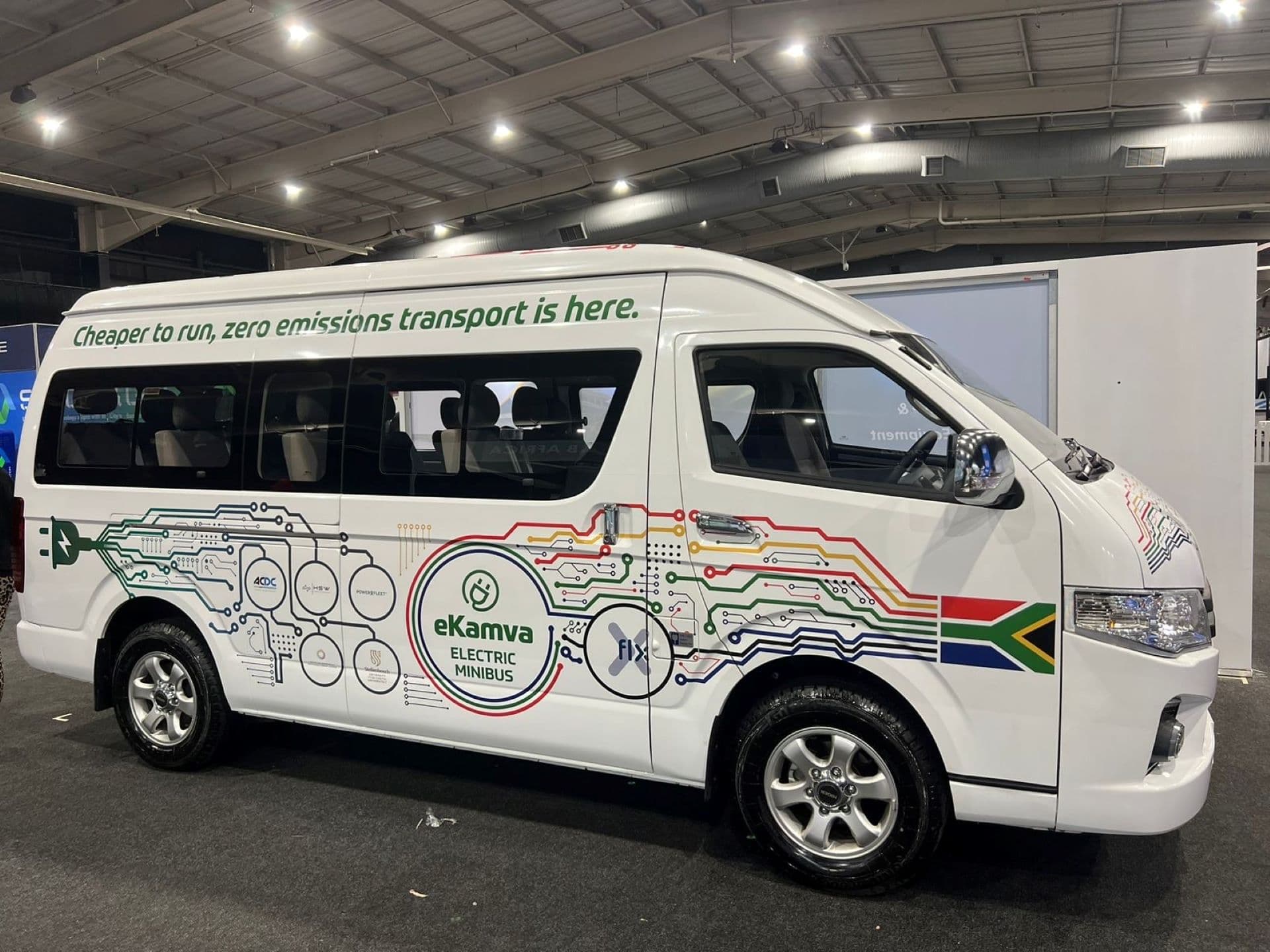
On 2 October, it was announced at the Smarter Mobility Africa Summit that South Africa’s first electric minibus taxi model, the eKamva, was launched by a consortium of companies and research institutions led by GoMetro.
The electric minibus will be supported by charging infrastructure product called flx EV. flx EV is an entirely new product specifically developed for the electrification and charging support of the minibus and commercial van sector. flx EV is a full turnkey product offering to the minibus taxi sector facilitating new electric vehicle model ownership and charging infrastructure specifically designed and customised for how the minibus taxi sector operates.
The partnership kicked off in 2023 to investigate and advance the feasibility of an electric minibus taxi suitable for South African conditions, by testing regular fuel-powered vehicles. The project team, consisting of GoMetro, Powerfleet (formerly MiX Telematics), HSW, ACDC Dynamics, and various entities within Stellenbosch University’s Faculty of Engineering, conducted rigorous and extensive testing in and around the town of Stellenbosch on existing taxi routes, using traditional minibus taxis.
Although fuel prices have momentarily decreased, commuters still feel the pinch of increasing transport fares. Typical South African commuters already spend up to 40% of their income on transport. At the same time, the minibus taxi sector is still struggling with the impact of the pandemic and ride-share apps on its operations. Minibus taxis transport millions of people in Southern Africa daily, contributing an estimated 30 million tonnes of carbon dioxide in South Africa alone and consuming two billion tonnes of fuel a year.
The flx EV website will soon allow minibus taxi owners and operators to apply to be added to the waiting list for the solution. flx EV is in the process of developing charging hubs with partners across South Africa, with the first hubs slated for development in Century City and Stellenbosch in the next 12 months. The flx EV app will allow taxi owners to manage their fleets, see each vehicle’s status and prepay for recharging, while drivers will be directed to their closest charging hub.
GoMetro CEO, Justin Coetzee, says: “This is a new approach to electrifying the smaller-vehicle public transport industry. We believe it will spark an entirely new economic sector and is socio-economically very important for the automotive sector.”
Historical data gathered by GoMetro indicates that replacing urban taxi and shuttle fleets with eKamvas will reduce carbon dioxide emissions by 13.7 tonnes per vehicle per annum, says project lead, Rudi Kriel.
“We have analysed that most taxis spend up to three hours a day between morning and evening peak hours at the ranks, more than sufficient time to fast-charge an eKwamva,” Kriel says.
“EVs have fewer breakdowns than internal combustion vehicles and are cheaper to run, which lead to increased profitability per vehicle - and they have a longer life expectancy,” he continues. “EVs also reduce nitrous oxides, sulphur oxides and particulate matter (known as PM2.5 particles) in the air, improving community health, a major cost factor for the government.”
He explains that PM2.5s are very small particles of 2.5 micrometres (0.0025 mm) or an even smaller diameter usually found in smoke: “They are small enough to enter deep into the lungs when inhaled, causing wheezing, coughing, chest tightness and difficulty breathing - and some may even get into our bloodstreams.”
The 15-seater eKamva has a range of more than 200 km between charges, fast-charges within 75 minutes via a 60 kW DC charger and slow-charges overnight for 10 hours. It delivers an estimated 40-70% cost savings over traditional vehicles on running costs, depending on the fuel price (inland vs coastal) and the distance of the taxi route in question.
The eKamva (a play on the isiXhosa word ikamva, meaning “the future” or “into the future”) is currently undergoing homologation - being certified compliant with local safety and vehicle standards - by the National Regulator for Compulsory Specifications. A model of the vehicle is on display at flx EV’s stand at Smarter Mobility Africa at the Gallagher Convention Centre from 2 to 4 October 2024.
EVs are considered a silver bullet to globally decarbonise the transport sector. The development of low-carbon transport in cities is part of the global agenda to delay climate change and relates to many of the United Nations’ Sustainable Development Goals. While EV sales have increased substantially in the Global North and many international vehicle manufacturers plan to stop production of combustion engines as early as 2030, in sub-Saharan Africa, the transition to EVs continues to be painstakingly slow.
“We view the eKamva as an extension of our drive towards decarbonisation,” says Coetzee. “flx EV will be using GoMetro’s extensive fleet orchestration platform, Bridge, to manage data from the vehicles in service, charger networks, power purchasing, payment systems, battery management and predictive maintenance, all in one place.”
“Since Powerfleet is at the forefront of innovation that leverages new technologies to improve fleet operations, safety and efficiency, we are very excited to be part of this pioneering initiative. The adoption of electric and hybrid vehicles continues to increase exponentially, globally, so we look forward to learning how we can support these solutions in the South African context,” says Catherine Lewis, Chief Customer Officer of Powerfleet.
Professor Thinus Booysen, Research Chair on the Internet of Things at Stellenbosch University, leads the team of testing experts. “The informal taxi sector must transform to EVs, but little is known about their energy requirements. This unknown factor is overshadowed by our energy scarcity and coal dependence on the electricity supply side. This collaborative project will ensure that we are prepared for and carefully manage this exciting transition,” says Booysen.
According to Dr Bernard Bekker, Associate Director of Stellenbosch University’s Centre for Renewable and Sustainable Energy Studies (CRSES), the future electrification of the transport section in South Africa raises significant technical and regulatory challenges related to integrating electric transport into our existing grid infrastructure. These challenges are in many ways unique to South Africa, where minibus taxis will potentially represent a much larger proportion of the future electrical fleet than for example Europe or the USA. “The availability of a real-life electric minibus taxi to inform our research activities will provide very valuable inputs into addressing these challenges,” says Bekker.
“The minibus taxi has long been a cornerstone of South Africa's public transport system, reliably moving millions of people — from families to daily commuters — every day. As the demand for sustainability grows, it is clear that the transport industry must evolve. At ACDC Dynamics, we are proud to play a pivotal role in this transformation by providing EV-charging solutions and sustainable energy products. By integrating electric-powered taxis and expanding charging networks, we are not only reducing the carbon footprint of this essential industry but also helping to create a greener, more responsible South Africa for future generations," says Mario Maio, Founder and CEO of ACDC Dynamics.
“HSW is passionate about bringing manufacturing local. The Western Cape has all the technical skills and resources to set up manufacturing facilities in support of such an initiative. There are already existing electronic manufacturers who have world class capabilities in the manufacturing of electronic products, such as Barracuda Holdings, which is one of HSW’s key customers, as evidence that this type of hi-tech manufacturing technology is already available locally,” says Ryan Webb, Managing Member HSW.
Staff Writer
Reporting from the front lines of the collision repair industry, delivering expert analysis and the technical updates that drive the African automotive sector forward.
More From News

Speeding Drivers Are More Likely to Handle Their Phones, Study Finds
New research finds drivers who speed are more likely to use phones, increasing crash risk, especially on high-speed roads.

What are SDVs and what do they mean for collision repair?
Software defined vehicles, or SDVs, are vehicles in which software rather than fixed hardware determines how most systems operate. Functions such...

Fuel price shock prompts insurer action to support South Africa’s repairers
South Africa’s motor body repair sector is under growing strain as sharp fuel price increases push operating costs higher, prompting some insurers...
KwaZulu-Natal’s Automotive Momentum looked at
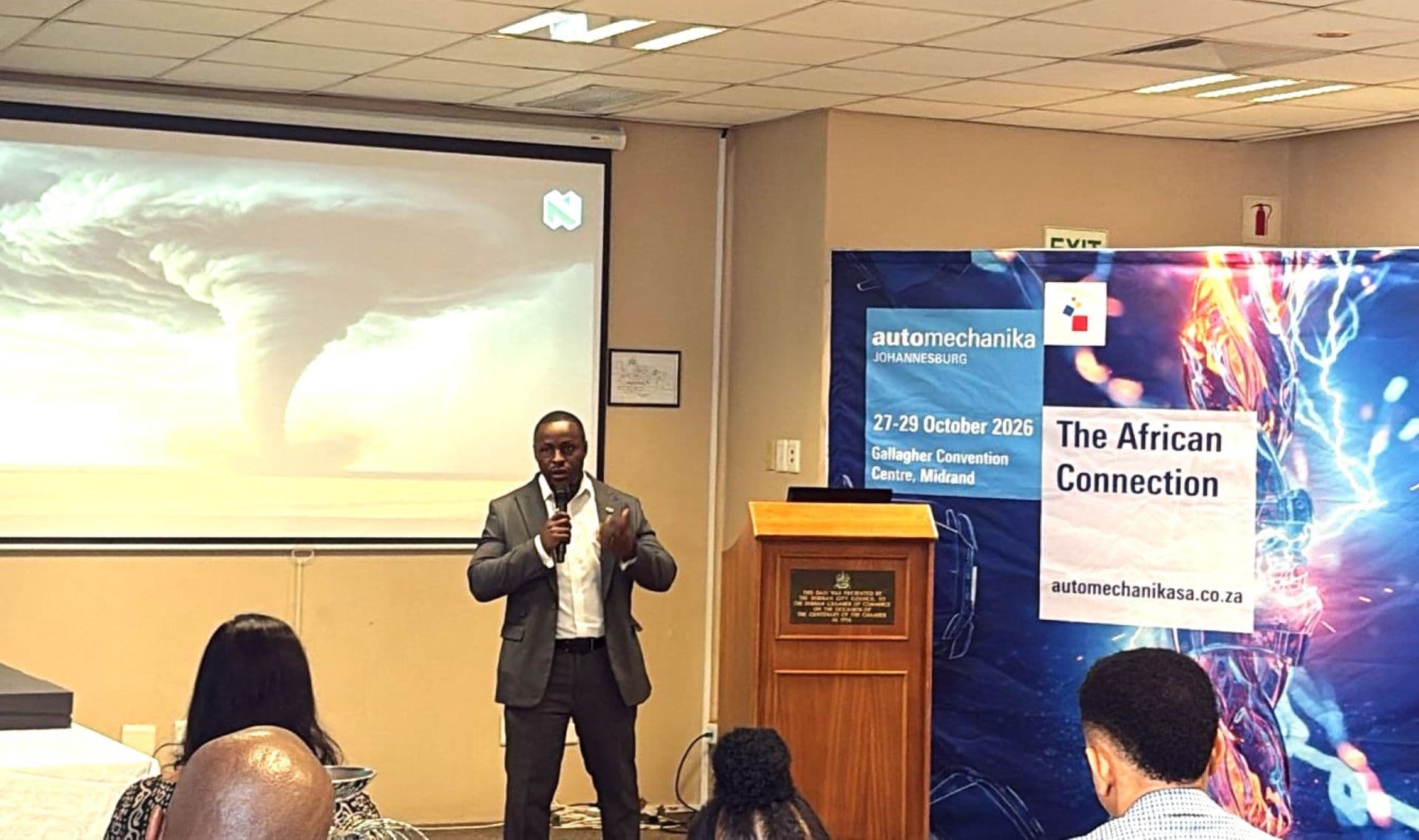
Durban’s Automechanika CEO Breakfast highlighted KZN’s rising automotive role, export growth and EV investment, plus aftermarket development.

We Buy Cars Drives Youth Employment
South Africa’s challenge of youth unemployment remains pressing, but targeted initiatives are beginning to show tangible results. We Buy Cars, in...
BASF Coatings advances sustainable accident repair with TÜV certified carbon assessment
BASF Coatings has strengthened its sustainability offering for the automotive refinish sector by securing TÜV Rheinland certification for the...