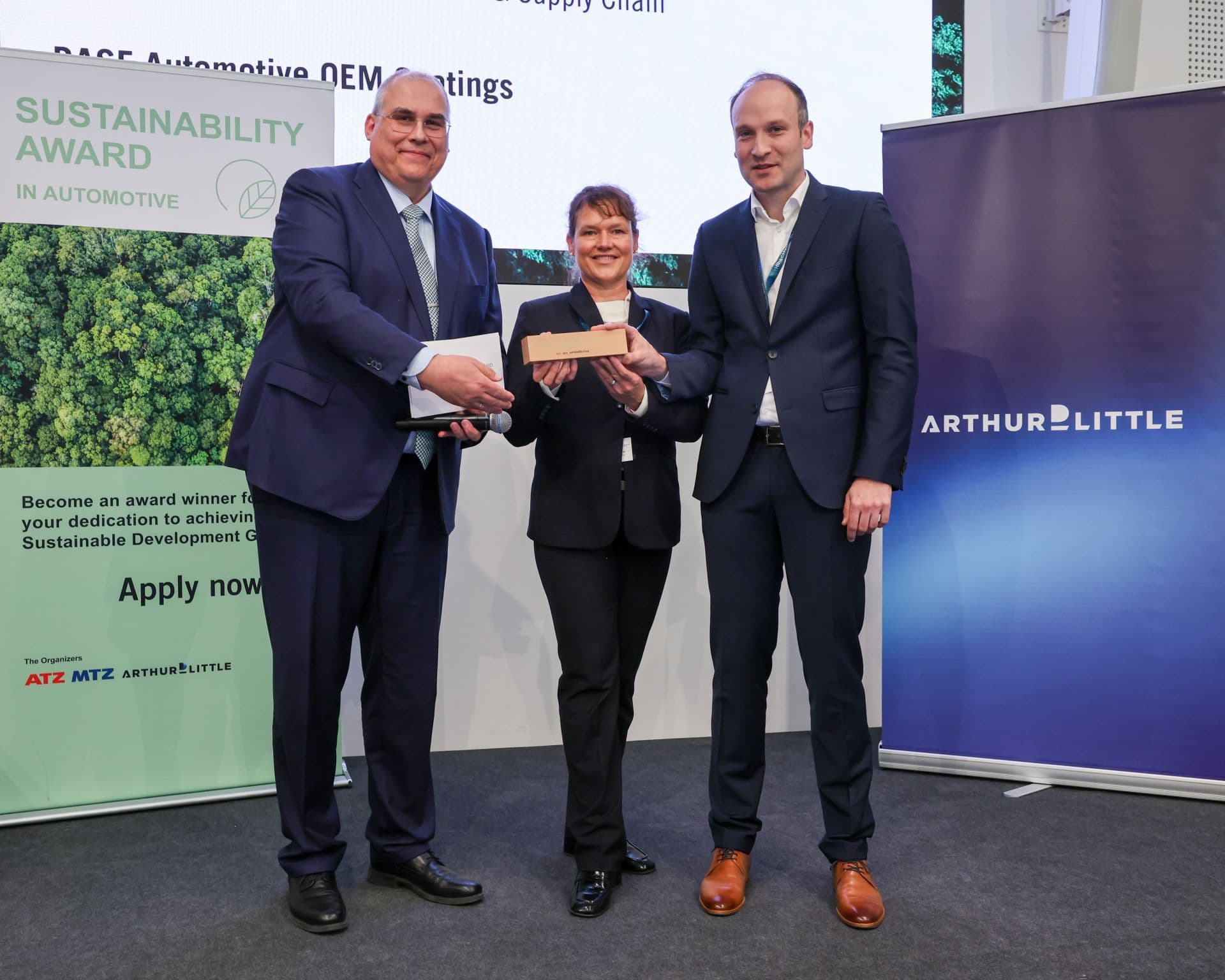
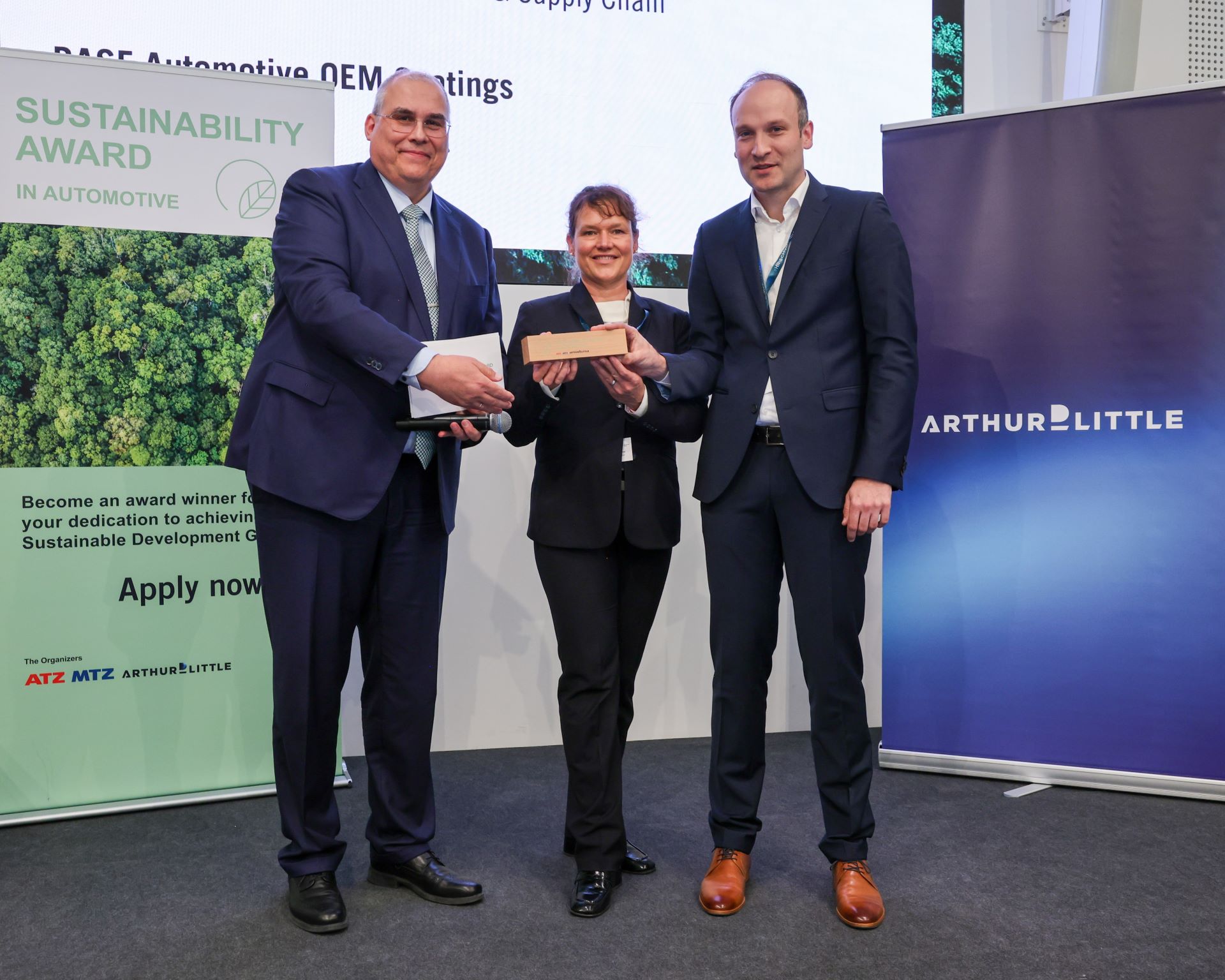
BASF Coatings has received the Sustainability Award in Automotive 2026 for its Overspray Free Application process, a new approach to two-tone vehicle painting that improves efficiency while reducing environmental impact.
The company was honoured in the Technology: Operations and Supply Chain category, which celebrates practical innovations that bring measurable sustainability benefits to industrial production. The award is presented jointly by the ATZ/MTZ Group of Springer Nature and the consultancy Arthur D. Little.
The Overspray Free Application process, known as OFLA, is a wet-on-wet painting method developed for two-tone vehicles. It uses digitally controlled paint jets to apply the contrast colour with precision, creating a clean paint line without the need for masking. This is made possible by BASF Coatings’ ColorSharp decorative paint technology, which has been specifically developed for overspray-free use. Its carefully adjusted flow and levelling properties support crisp, accurate paint edges and help prevent the imperfections often seen with traditional spray-applied basecoats.
Because the paint is applied only where it is required, the process achieves full transfer efficiency and removes overspray altogether. For vehicle manufacturers, this offers a number of advantages, including lower energy use, reduced carbon emissions, less waste from masking materials and lower paint consumption, while still maintaining reliable quality in large-scale production.
Alvin Lao, Head of Global Sustainability for Automotive OEM Coatings at BASF Coatings, said the award highlights the importance of combining paint innovation with process development to improve the environmental performance of automotive production. He added that the recognition confirms OFLA as a solution that delivers both operational and sustainability benefits for manufacturers.
The development of OFLA has been supported by collaboration across the automotive supply chain. BASF Coatings contributed its paint and process expertise, Renault provided manufacturing know-how, and Dürr supplied advanced application and automation technology. The process is already being used in series production at Renault’s Maubeuge plant.
According to BASF Coatings, the results achieved at the site include an energy saving of around 25 per cent, equivalent to approximately 1.7 gigawatt hours per year, and a reduction of roughly 300 tonnes of carbon dioxide annually. The company also reports that the method removes about 300 grams of paint-contaminated masking waste per vehicle and saves around 200 grams of paint per car by avoiding the additional basecoat and clearcoat stage required in conventional two-tone painting methods.
Staff Writer
Reporting from the front lines of the collision repair industry, delivering expert analysis and the technical updates that drive the African automotive sector forward.
More From News

BASF Coatings Advances Automated Paint Repair for Modern Body Shops
BASF Coatings is driving robotics-led paint repair innovation, linking digital colour systems with automated application for modern body shops.
Forvia Hella expands China strategy with local launch of high-resolution headlamp system
Forvia Hella has launched its SSL | HD headlamp system in China, debuting on the Zeekr 8X with fully localised development and production.

Rising Distraction, Sharper Cost Pressures and Injury Claims Reshape Insurance Market
US motor insurance is shifting as distracted driving, rising claims costs and price sensitivity reshape risk and underwriting in 2026. Master
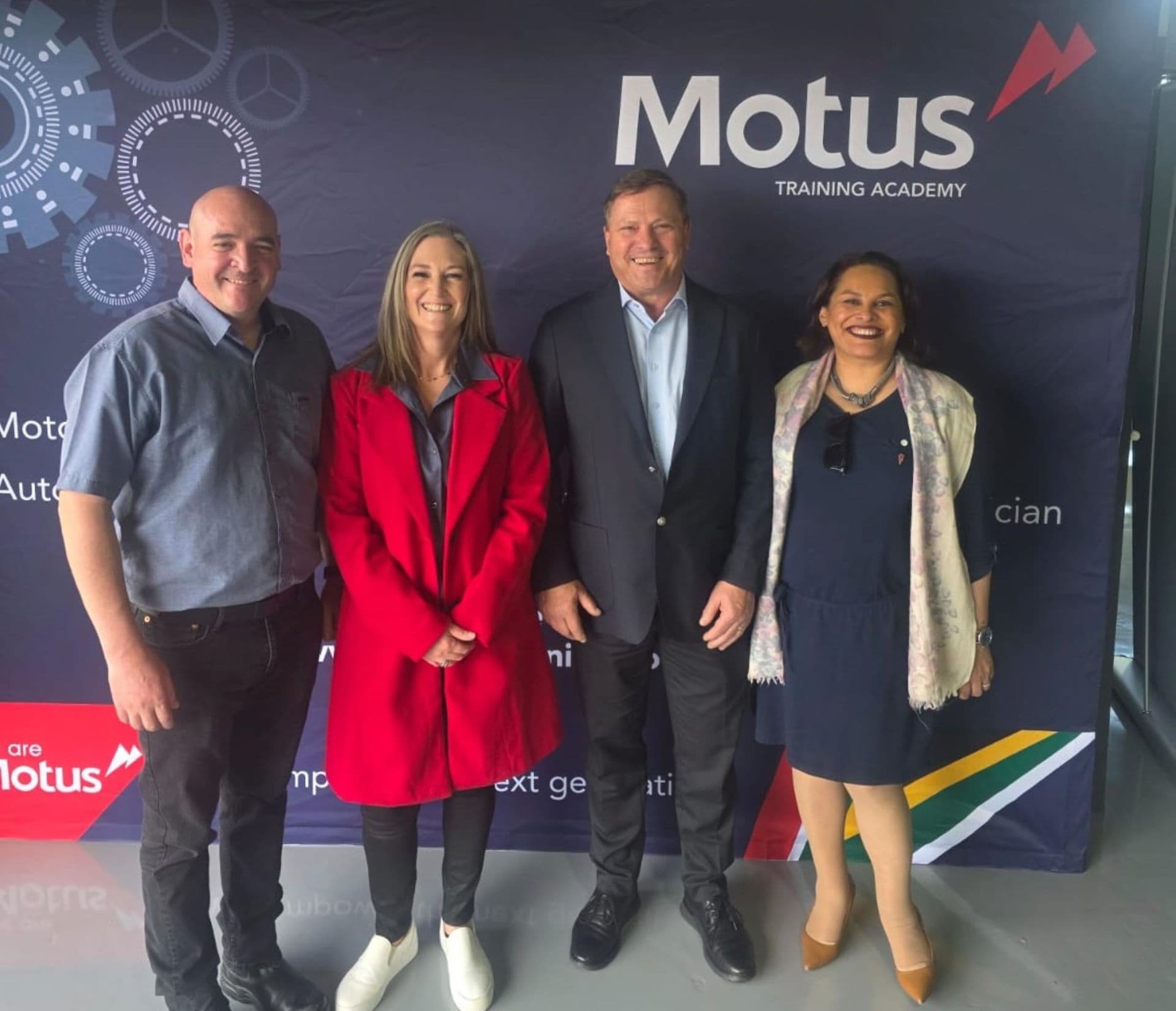
Training Tomorrow’s Technicians
Hyundai and Motus launch a training academy in Pinetown to develop 2,000+ students annually in EV, diagnostics and advanced automotive skills in South Africa
Glasurit Backs Global Skills Challenge Ahead of WorldSkills 2026
Glasurit becomes official paint provider for WorldSkills 2026 in Wollongong, supporting automotive refinish training and skills development.
The ABC of Correct Filler Use in Collision Repair
Correct body filler use relies on OEM procedures, proper surface preparation and controlled application to prevent corrosion, cracking and failure.