
A fundamental realignment in the global automotive ecosystem is shifting the aftermarket's centre of gravity towards the east — and for independent repairers, the implications are significant.
Rapid growth in vehicles manufactured in India and China is transforming demand for parts across multiple regions, including Africa.
This is according to Andre Scholle, Vice President and Head of Region India, Turkey, the Middle East and Africa (MEA), and the Commonwealth of Independent States (CIS) at ZF Aftermarket.
In South Africa, nearly half of all passenger vehicles sold are manufactured in Asia, reflecting a decisive shift in vehicle sourcing. At the same time, the African market is characterised by heavy reliance on used passenger vehicles. More than six million passenger cars are currently out of warranty — a reality that has measurably redirected consumer spending away from official dealerships and towards independent workshops, where older vehicles require more frequent and parts-intensive maintenance.
New right to repair legislation in South Africa has reinforced this trend. By dismantling monopolies historically held by original equipment manufacturers, the regulatory change has allowed independent workshops to compete more effectively for service business, while directly increasing demand for high-quality non-OEM aftermarket parts.
The vehicles arriving in those workshops are, increasingly, Asian-built. In several African markets, Chinese and Indian vehicle brands now account for nearly 70 per cent of light vehicle sales. This is fundamentally reshaping the aftermarket landscape as vehicles increasingly move away from traditional European specifications. For repairers, that means parts ranges, tooling, and technical knowledge must evolve accordingly.

The scale of the shift is underpinned by production numbers that are hard to ignore. In 2025, China produced a record 34.53 million vehicles, maintaining its position as the world's largest producer for the seventeenth consecutive year, and now accounts for 35.6 per cent of the global automotive market. India, meanwhile, is the world's largest producer of tractors, the second largest manufacturer of buses, and the third largest producer of heavy trucks — with vehicle exports rising 19 per cent in 2025 to reach 5.3 million units.
India has become a critical manufacturing hub for parts supply into Africa, benefiting from globally competitive quality standards across both value and premium segments, as well as structurally lower production costs than Europe and Latin America.
For the aftermarket supply chain, this manufacturing expansion is creating strong trailing demand for replacement components. Rather than exporting parts from Europe, established aftermarket manufacturers are decentralising operations and establishing production capabilities closer to emerging centres of gravity. Product ranges are also being adapted to reflect local vehicle populations and operating conditions — factors that directly affect what repairers can source and at what price.
The broader regional picture continues to evolve. Countries such as Morocco are emerging as gateways for nearshoring parts and vehicle manufacturing into Europe. In 2025, Morocco overtook South Africa as the continent's leading vehicle producer, with annual output exceeding one million units.
For established aftermarket manufacturers, Scholle argues, this eastward shift represents not merely expansion but a fundamental restructuring of business models to align with the forces reshaping the global automotive aftermarket.
"The question is no longer whether global growth patterns have changed, but whether organisations are structured to compete effectively in the markets where growth is now taking place," he concludes.
For independent repairers on the ground, the message is equally pointed: the fleet is changing, the legislation has shifted, and the supply chain is catching up. Those who adapt to service Asian-brand vehicles with the right parts and expertise stand to benefit most from this realignment.
Staff Writer
Reporting from the front lines of the collision repair industry, delivering expert analysis and the technical updates that drive the African automotive sector forward.
More From News
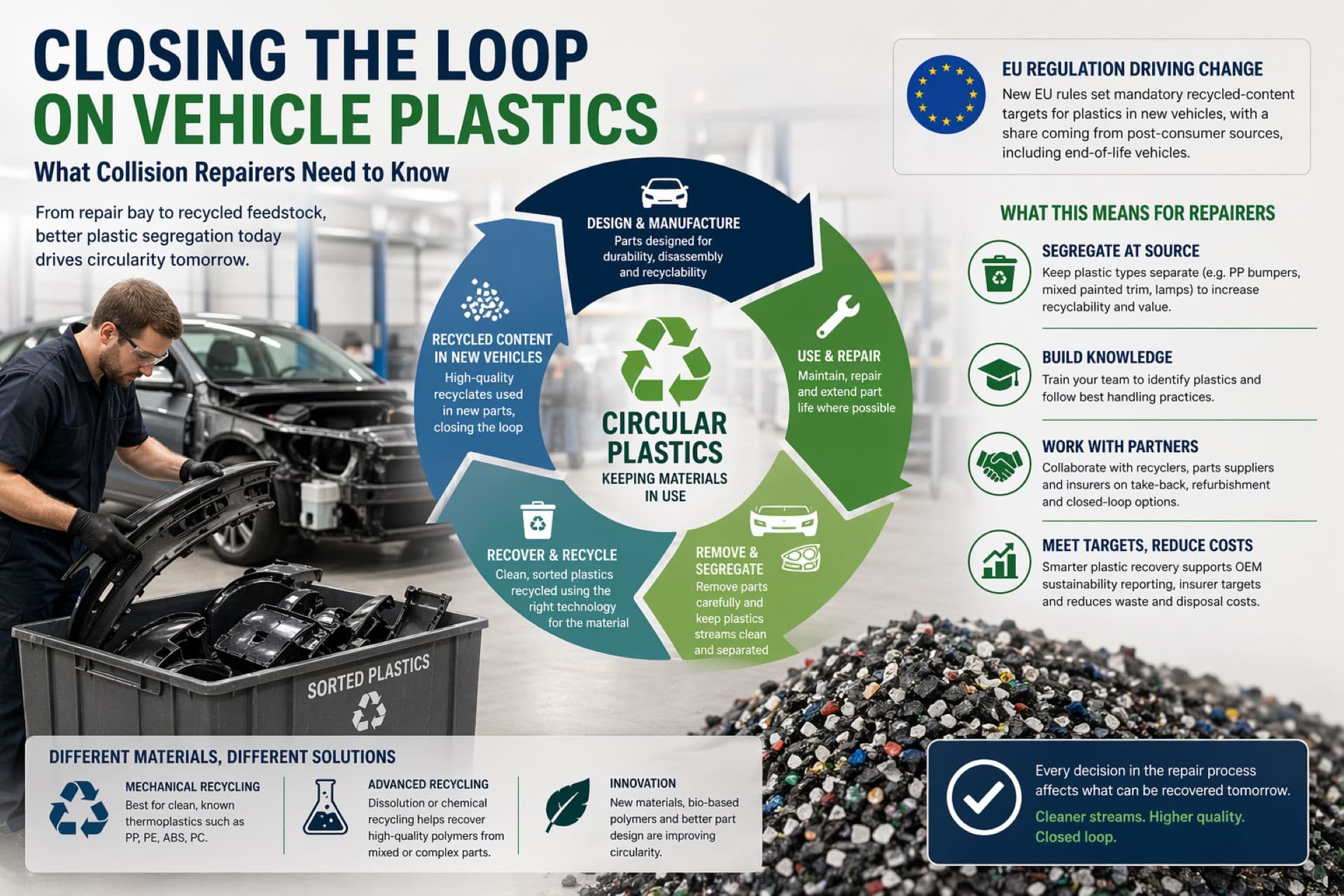
Closing the Loop on Vehicle Plastics: What Collision Repairers Need to Know
New EU rules are pushing vehicle makers and repairers toward plastics circularity, with rising recycled content targets and better end-of-life recovery

Zimbabwe Delegation Explores BAIC’s Role in Regional Automotive Growth
Zimbabwe’s automotive leaders visit BAIC South Africa to explore manufacturing, skills development, and regional industry collaboration.

What are SDVs and what do they mean for collision repair?
Software defined vehicles, or SDVs, are vehicles in which software rather than fixed hardware determines how most systems operate. Functions such...
Fuel price shock prompts insurer action to support South Africa’s repairers
South Africa’s motor body repair sector is under growing strain as sharp fuel price increases push operating costs higher, prompting some insurers...

KwaZulu-Natal’s Automotive Momentum looked at
Durban’s Automechanika CEO Breakfast highlighted KZN’s rising automotive role, export growth and EV investment, plus aftermarket development.

We Buy Cars Drives Youth Employment
South Africa’s challenge of youth unemployment remains pressing, but targeted initiatives are beginning to show tangible results. We Buy Cars, in...